Ganga (2024)
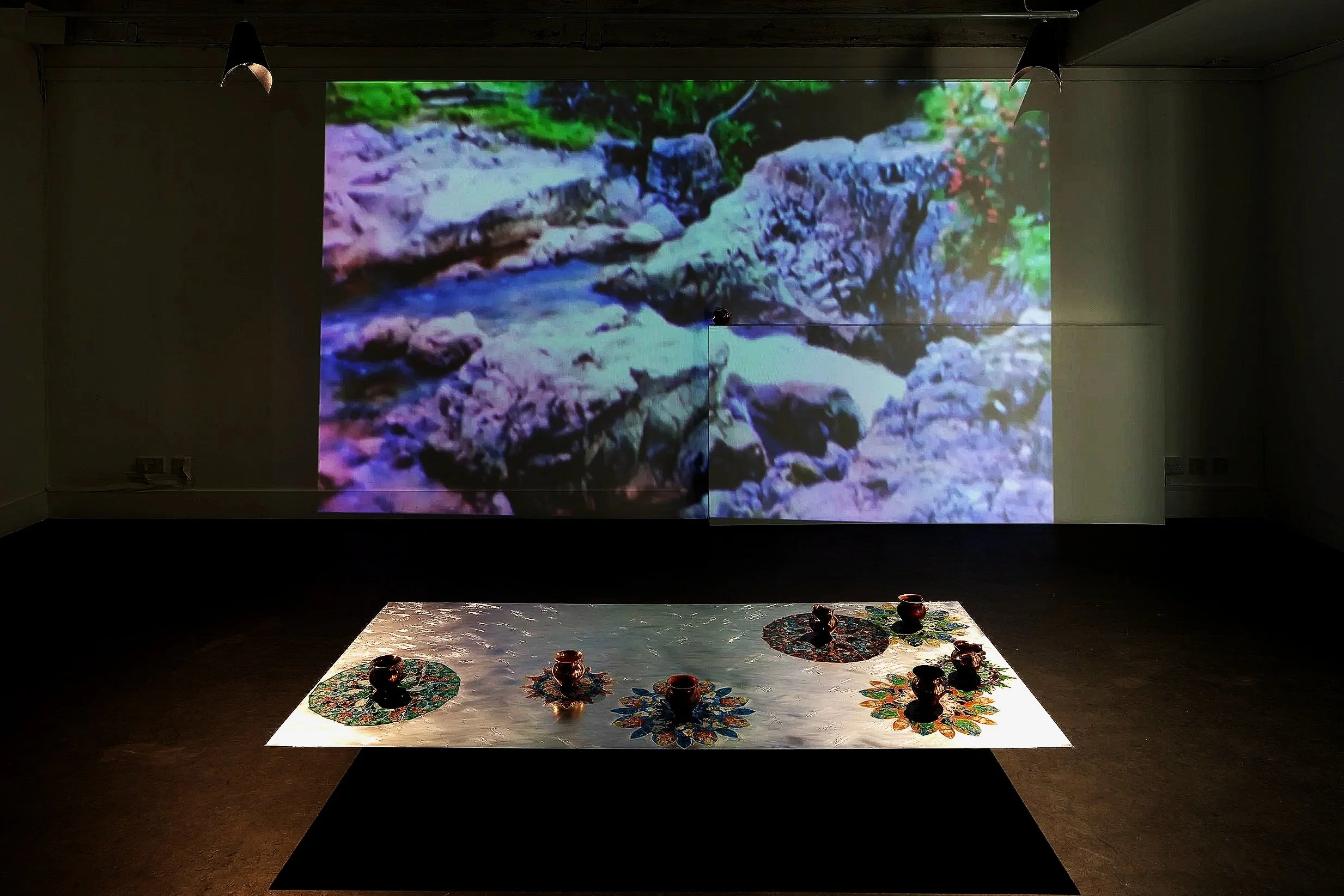
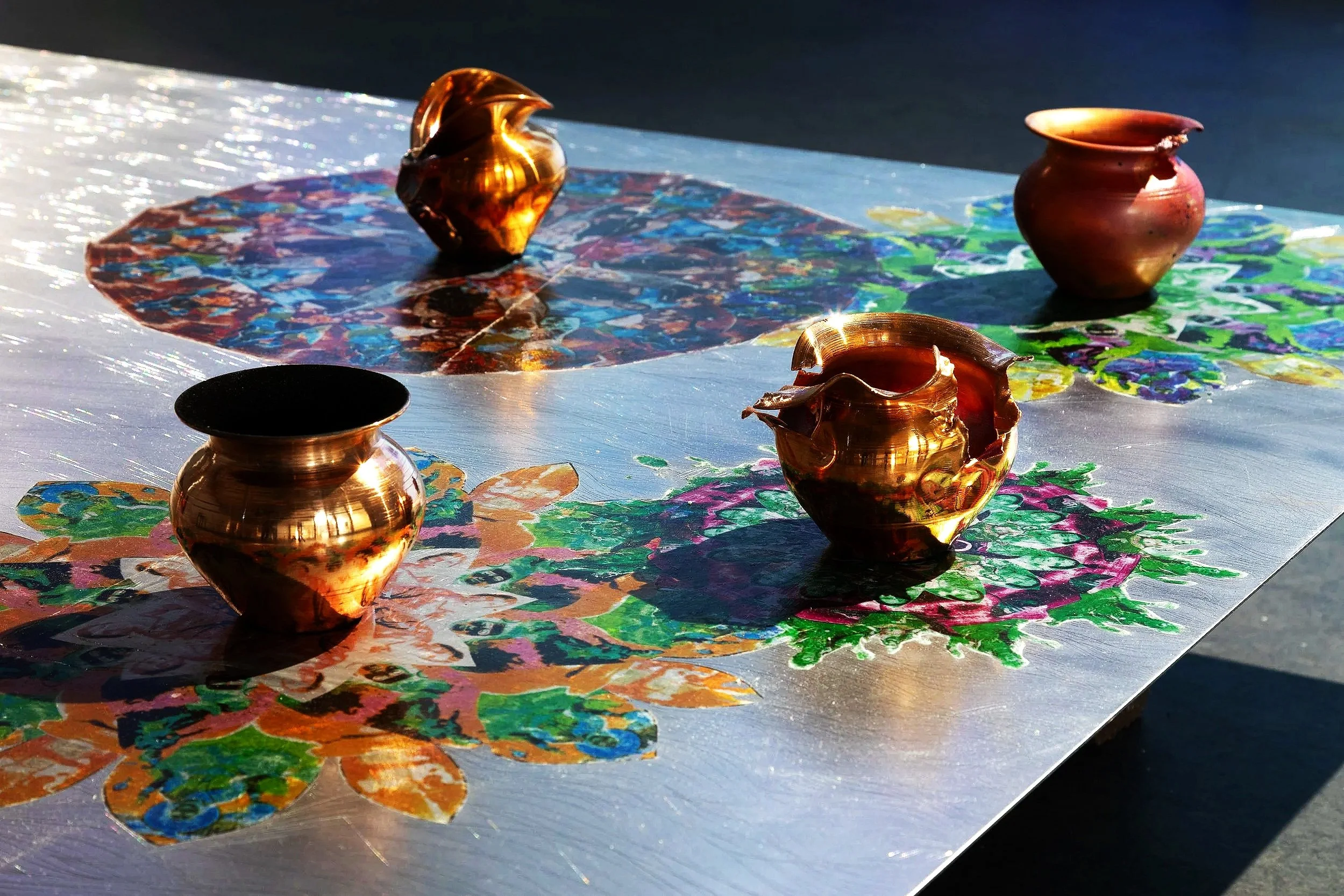
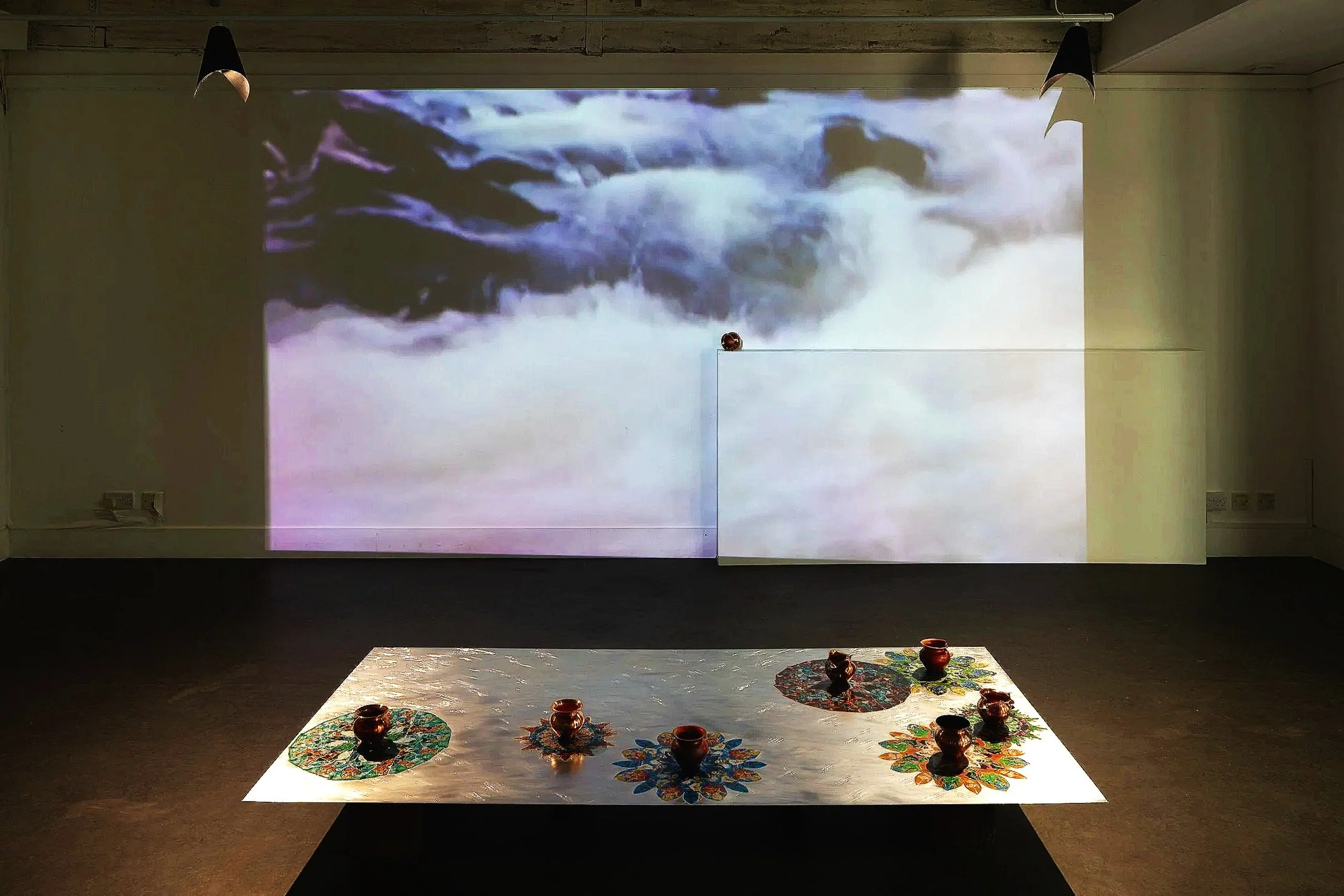
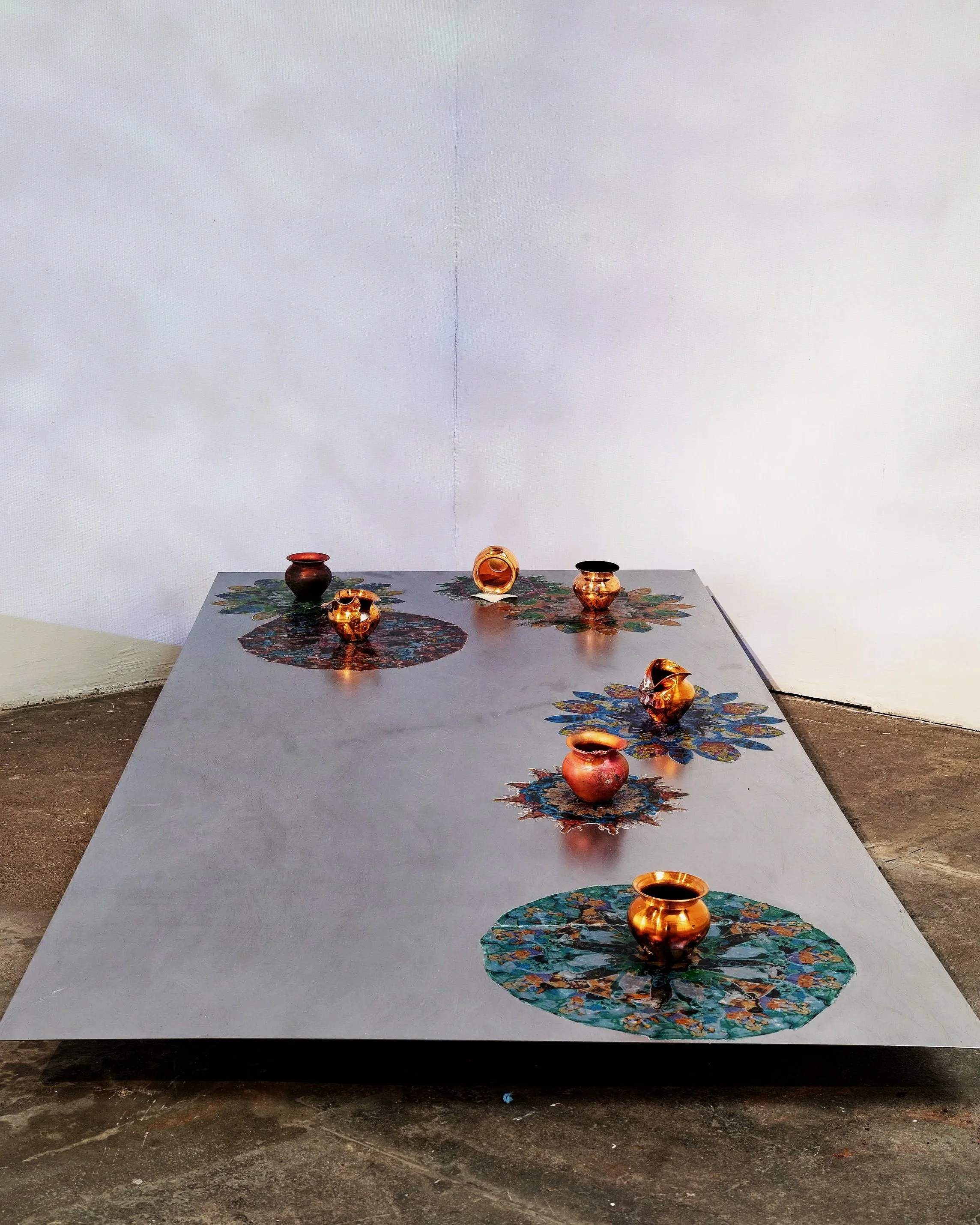
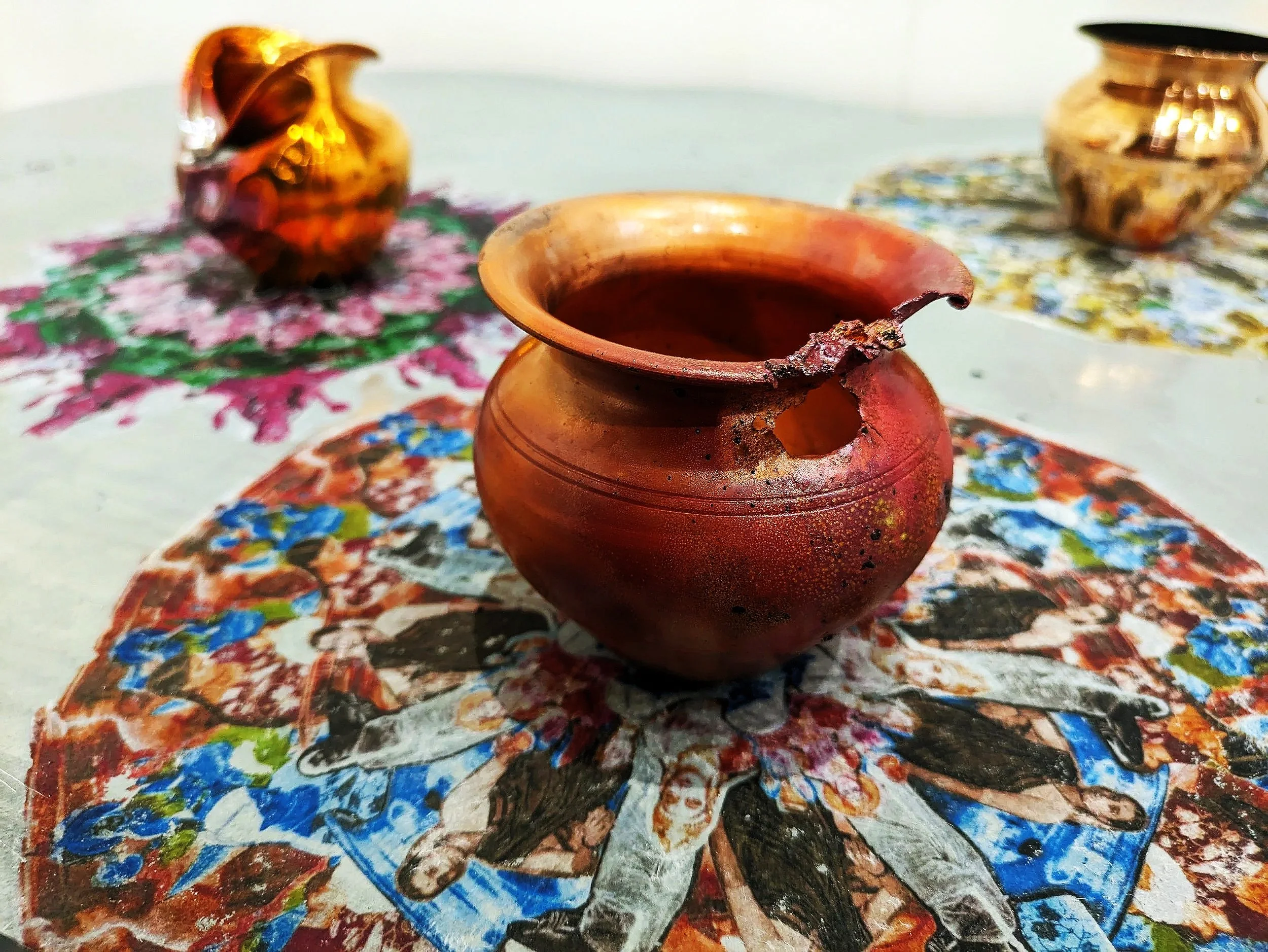
Film projection, audio & sculpture installation: phototransfer on engraved mild steel & copper ‘lota’ water pots
Running time 15mins
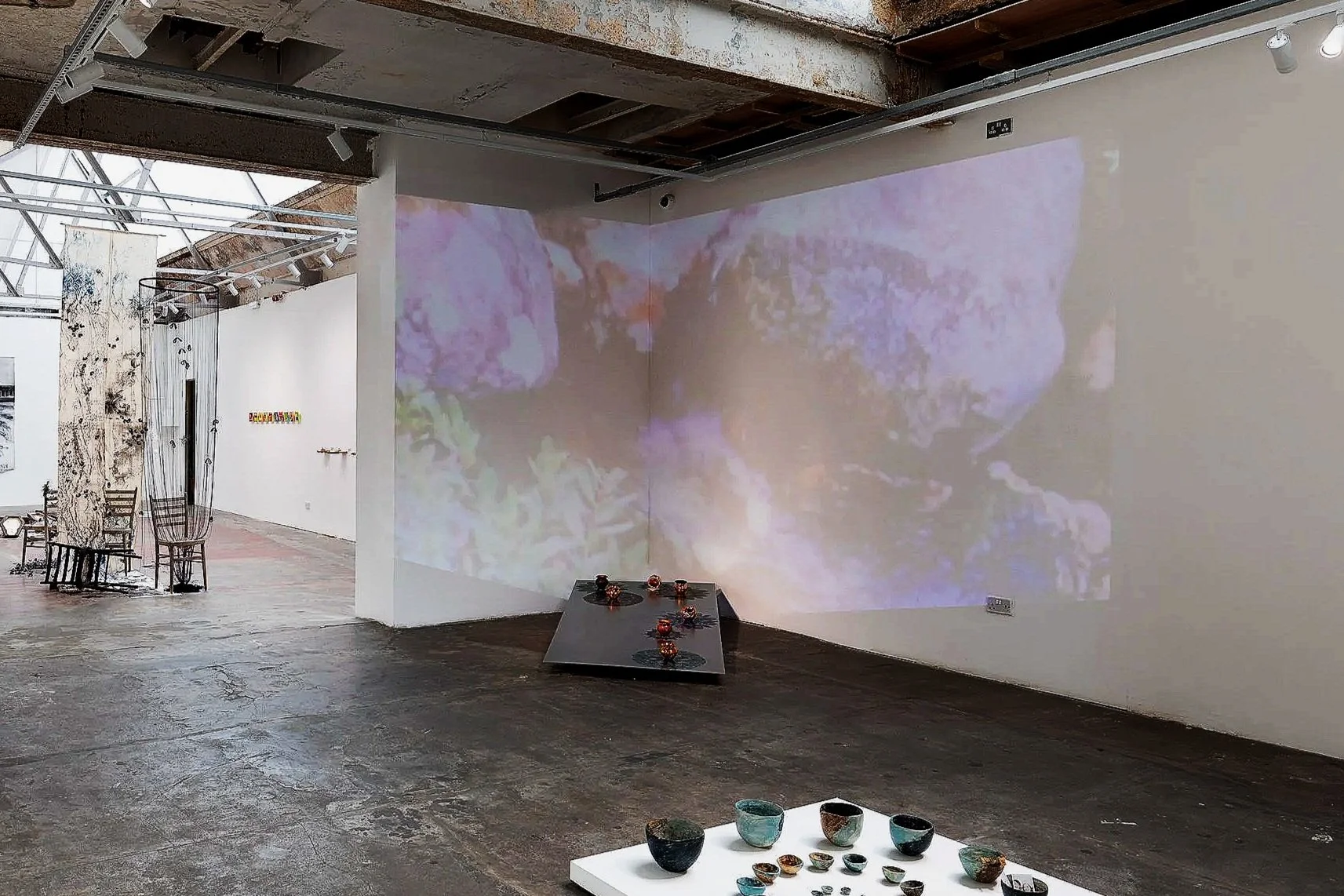
Exibited as part of Hot Border, West Dean Graduate Diploma Summer Show & The Copeland Gallery, Peckham South London
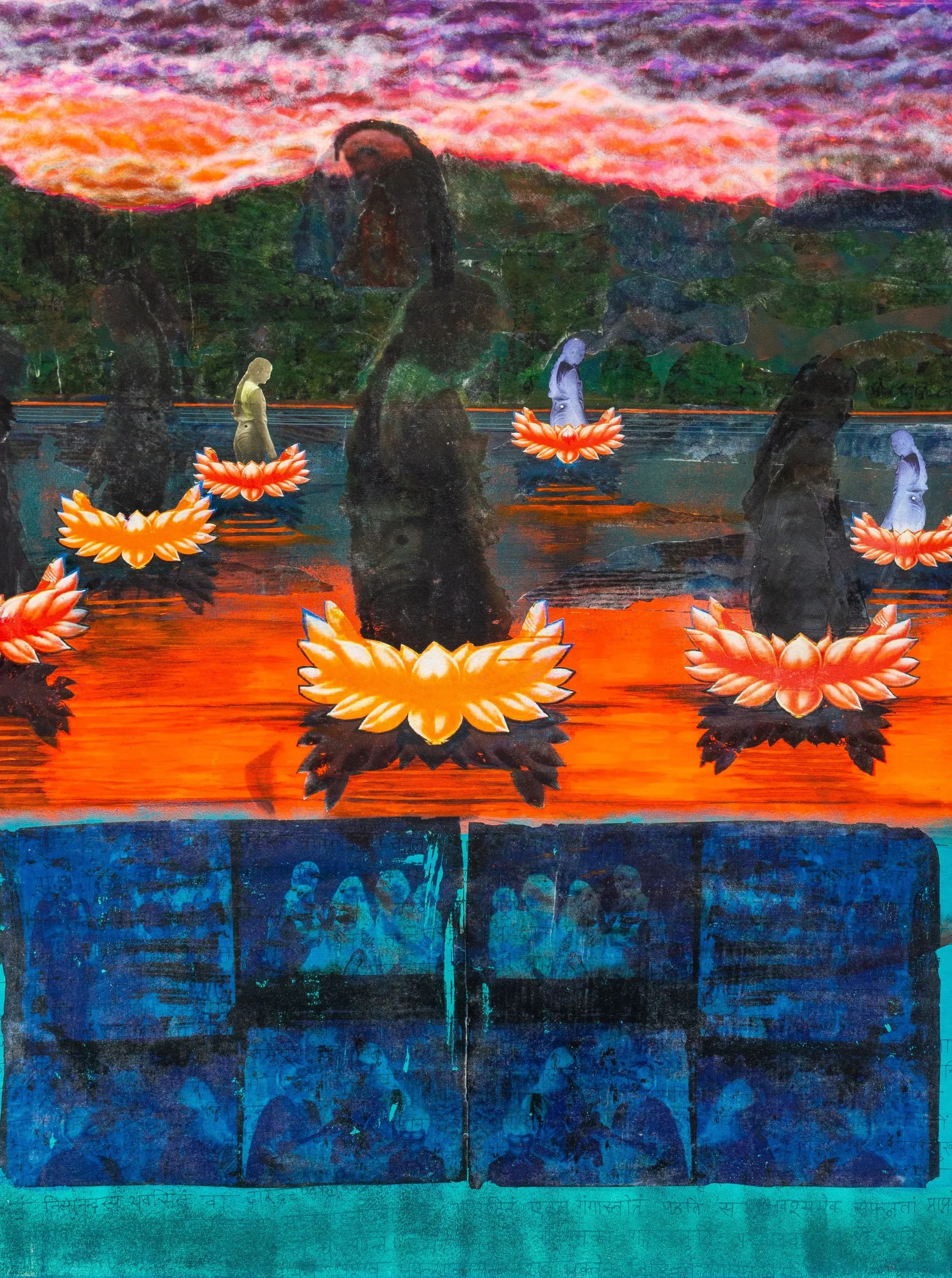
ओ देवी गंगा! तुम दिव्य नदी हो, तुम तीनों लोकों के रक्षक हो, तुम पवित्र और अधीर हो, तुम भगवान शिव के सिर पर आभूषण हो। हे माता! मेरा मन हमेशा तुम्हारे पदों में आराम करे।
Translated from Sanskrit:
O Goddess Ganga! You are the divine river from heaven, you are the saviour of all the three worlds, you are pure and restless, you adorn Lord Shiva’s head. O Mother! may my mind always rest at your lotus feet.
Part of a series of work on the Hindu goddess, Ganga, namesake of the River Ganges (2024), this light projection and sculptural site-specific installation comprises of a 1967 cinefilm incrementally slowed down and reversed, to depict distorted or altered notions of the flow of time; cyclical in the Hindu Vedic sense, the linear flow of a river from it's source to the sea, but repeated over millennia in the water cycle, and the short human lifespan in condensed moments of the flow of time captured in the film. The viewer is immersed in the multisensory elements of the installation as one might be immersed in water.
The music, sampled from the classical Indian flute Raga, Pilu, meaning 'darling', its lyrical passages, incrementally slowed down and layered, evoke yearning and a dissonance between memory and the present moment. The full film can be found on my YouTube channel:
Fascinated by a photograph of my mother as a young woman, I used this image to explore the Hindu mythology around the Goddess Ganga, which can appear problematic to western contemporary eyes. The mandalas, photo transfered on to the steel plate, are comprised of images of my mother, aunts and grandmother, taken in pre-independent India and Kenya, under British Colonial rule, and the copper lota pots (a symbol of the Goddess) personify Ganga, the Divine Mother, Giver of Life, purity, fecundity and forgiveness.
As a child, after bathing us and pouring the last of the water over our heads, my mother would offer up a prayer to the Goddess, “Om Mara Gange”, as a blessing and thanksgiving for the water.
The mythologies around Ganga are multiple, and she, like many other Godesses have their power tempered or mitigated by the Gods. In one story, of her arrival on Earth, Ganga is guided from the heavens through the locks of Lord Shiva, as without his intervention, her raw elemental power would have destroyed the Earth. In doing so she formed the sacred River Ganges.
Another story, which can be mistakenly judged negatively if only partially read, sees the celestial goddess Ganga, beseeched by the Vasus (mischevious attendant deities). They are to be punished for stealing a sacred cow by being cursed to be born as mortals. The Vasus beg Ganga to be their mother on Earth. On each of their births, she drowns them in the river, much to the horror of her earthly husband, to whom this seems like an act of abhorrent and callous infanticide. It is only when reading this story in its entirety and with a cultural understanding that we see that these are acts of mercy, releasing the souls of cursed deities from their punishment, back into immortality. The Vasus then form the Krittika Constellation, also known as The Seven Sisters or Pleides.
It is these moments of ambiguity, misinterpretation, tension and cultural misreading where I hope to find space to ask questions.
Credits: Hill to Dale, (1967) (excerpts) Doug and Norah Brear The Yorkshire Film Archive & British Film Institute Archive (Copyright free)
Pilu (Introduction) Hariprasad Chaurasia. Nimbus Records