Prohibeo Hominis (Ethelochoric: Non-Native Species) Cat. No: J338966-170140 (2024)
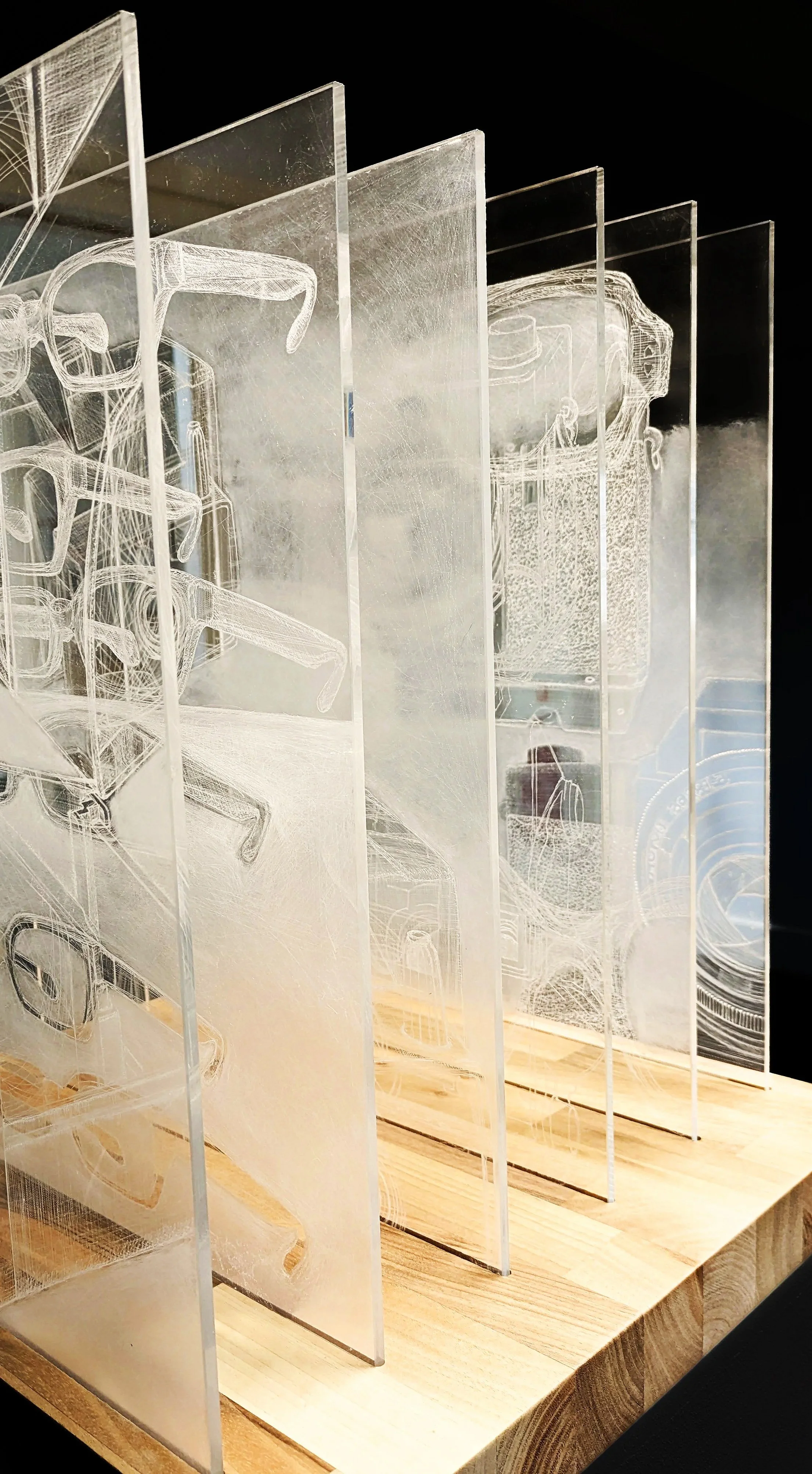
Scuplture & Light Projected Installation: Engraved Perspex, wood, LED lights, 35mm slides, chalk pastel on Mylar, ink, slide viewers & projectors.
Part of From the Glasshouse, pop-up group exhibition, 5 Feb 2024
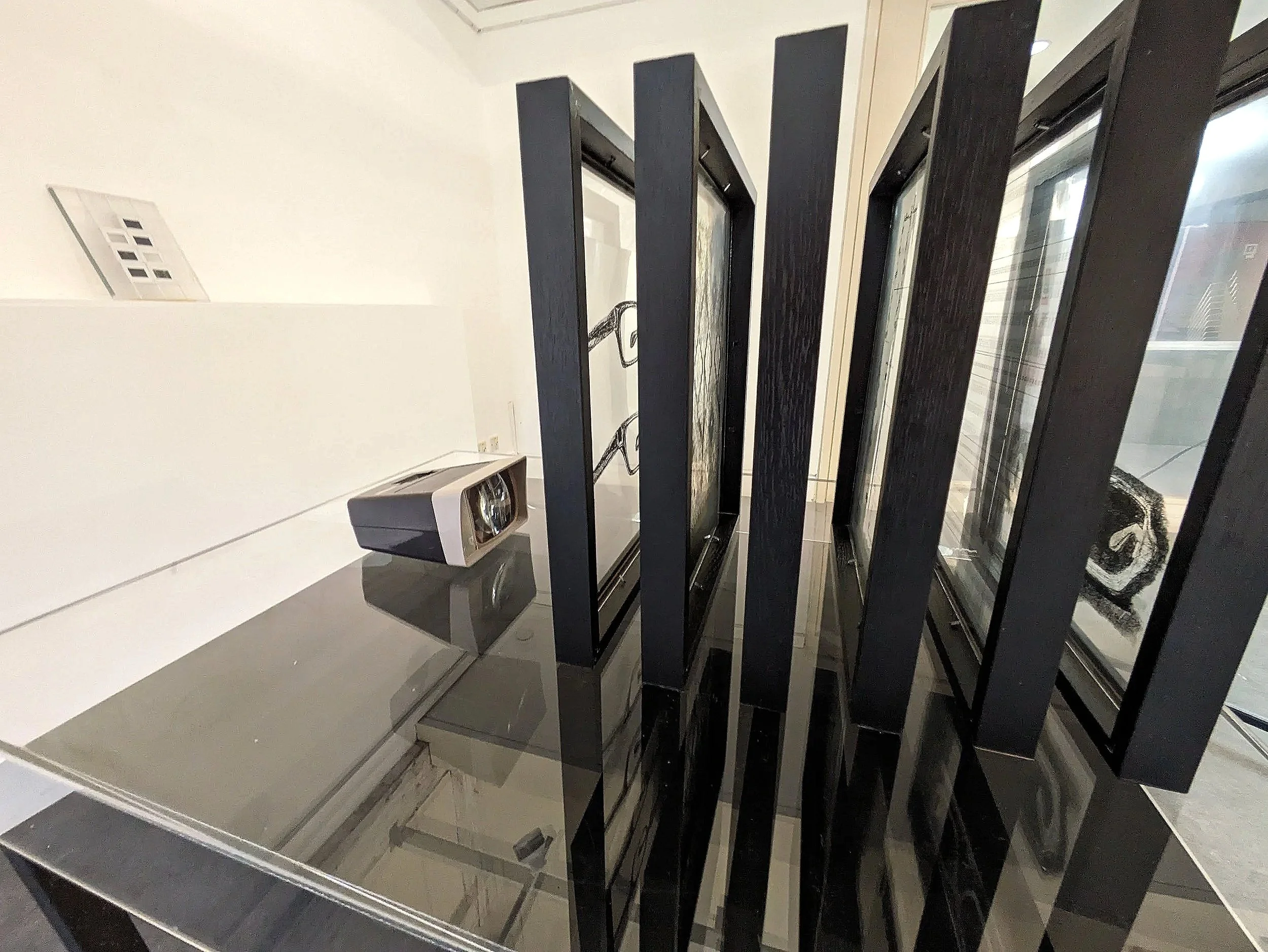
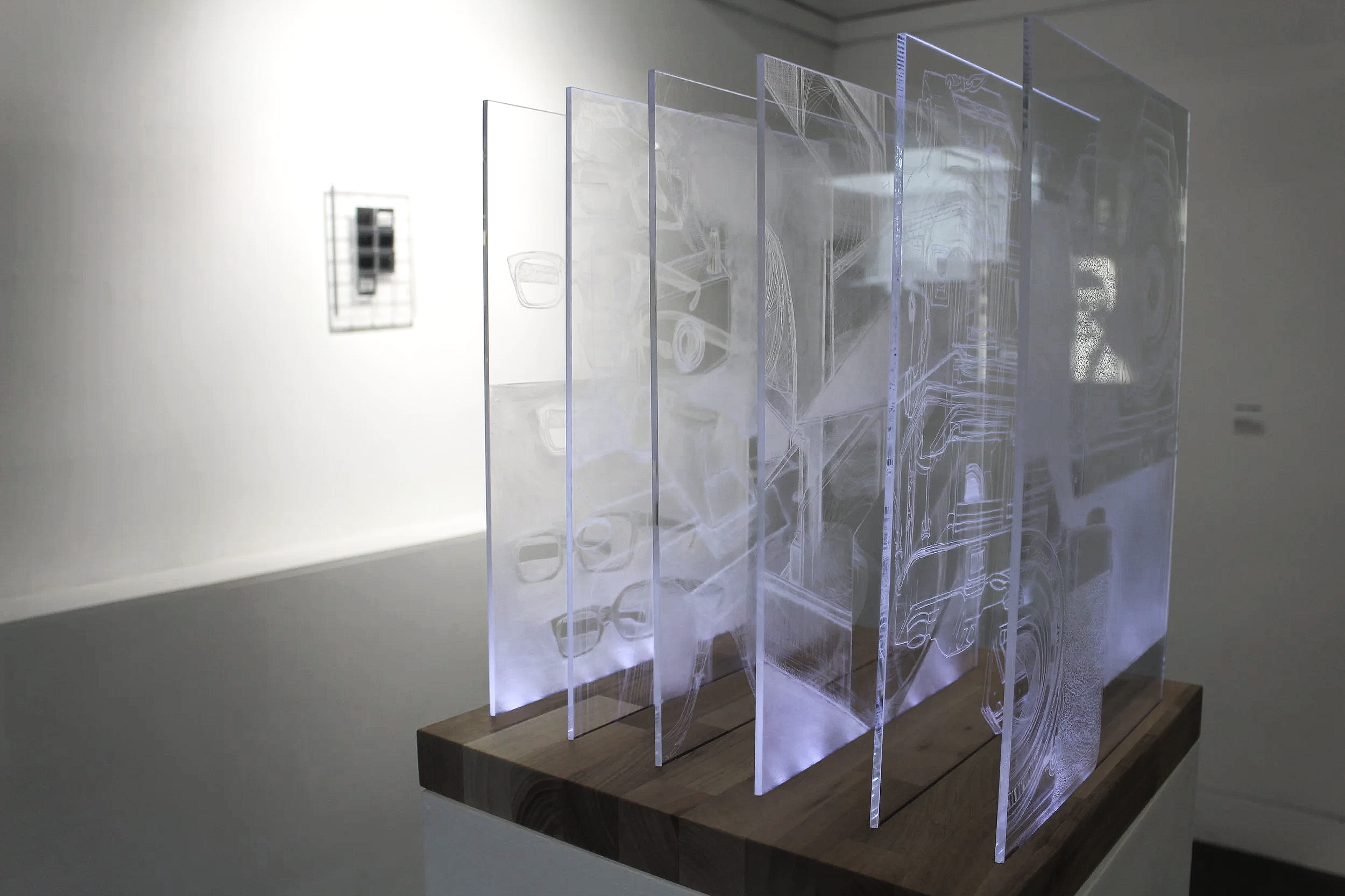
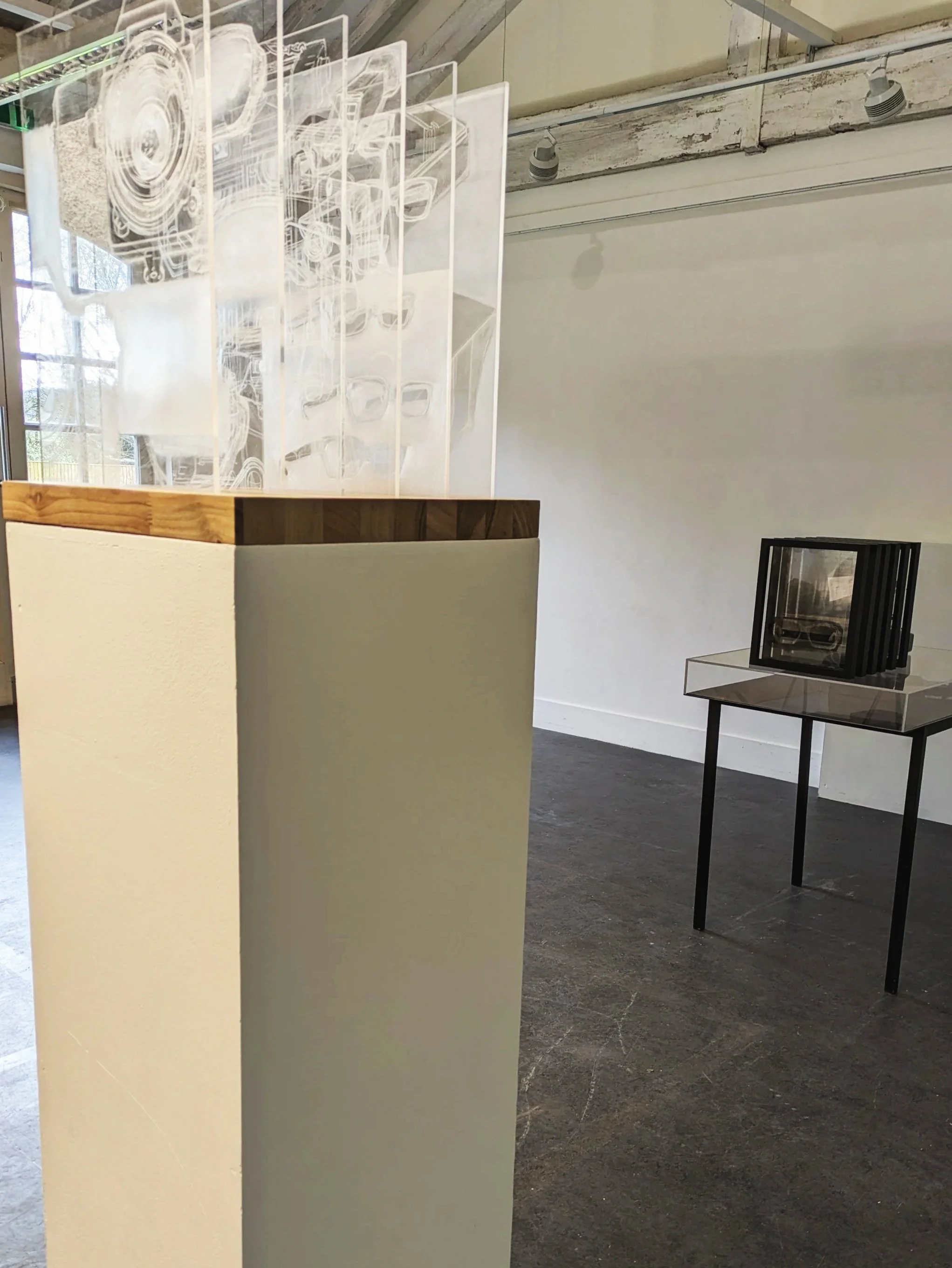
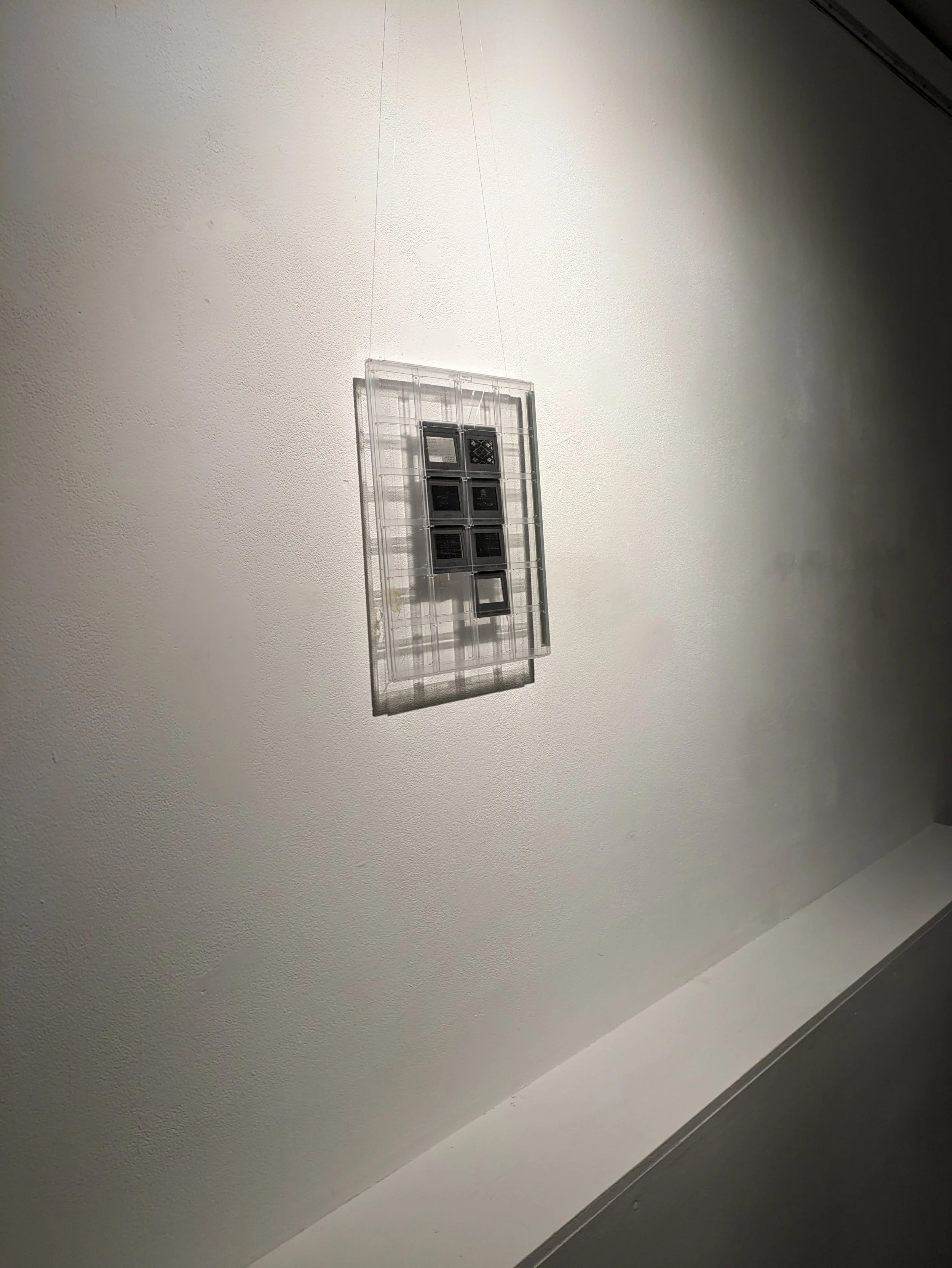
Inspired by the glasshouse as a repository for botanical curiosities and the spoils of colonialism and Empire, the work here explores how, much like exotic plants transported from far-away places, humans too are transported across continents.
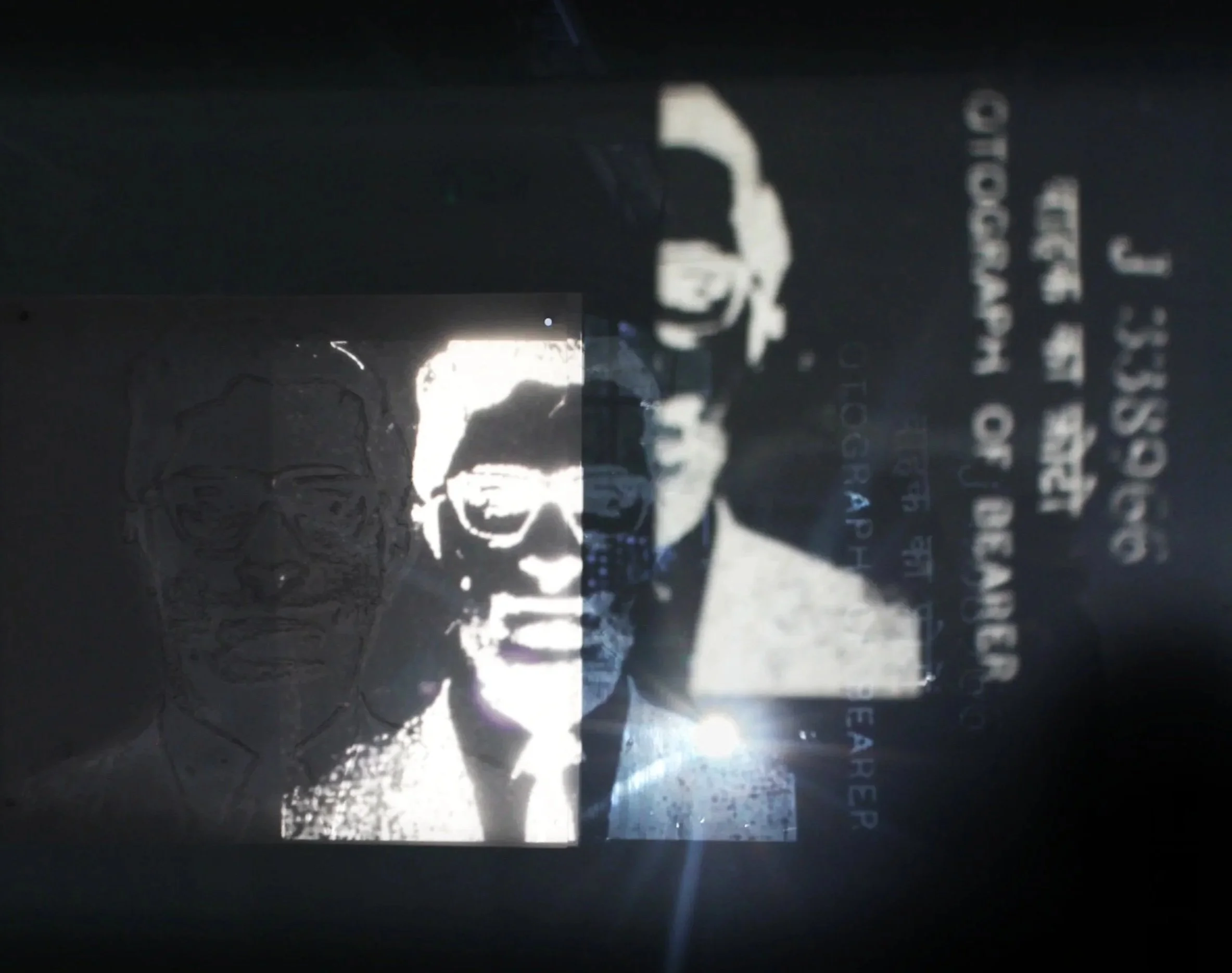
Transportation and migration stories are multiple and varied, whether economic, aspirational or of those fleeing political or environmental turmoil. By reducing people to the outward characteristics that signify their identity, the objects they own, their jobs and the bureaucracy that documents them, they are categorised and decisions over who can stay are controlled.
The notion of control extends to the structures and materials of the glasshouses. How is what we see enabled or inhibited by transparency, translucency and opacity, determined by how the glass is treated? How does the interaction of light, through refraction, reflection and the layering of these surfaces, reveal, obscure or hide our understanding of who is seen; the whole person, their humanity, relationships, narratives and memories or just these partial impressions?
The title of the work relates to Linnean taxonomy, the practice of classifying species in botany and zoology, their Latin name signifying genus to categorise them in taxonomic hierarchies of relationship. The Latin for ‘Hindu man’ being prohibeo hominis, ‘Ethelochoric’ - the intentional transportation of plants or seeds to different regions for agricultural and gardening purposes (as opposed to agochoric – unintentional) - and is therefore a ‘nonnative-species’ (as opposed to an ‘invasive’ species). The catalogue no. relates to the numbers that bureaucratise us, enabling the identification and tracking of individuals across borders.
All of the objects depicted here belong to my Dad or are images that relate to parts of his life; passport photos, immigration documentation, things that relate to his job as an engineer and gifted mathematician, though none are clear or explicit. Beginning with a practice of devotional drawing through detail and labour, there is an absence of the personal narratives of his migration story, yet stories can be constructed about the people to whom personal effects and bereaucratic paper-trail belong.
The cameras, slide viewers and glasses belong to him and ‘witness’ his migration journey and life in Britain, though the pictures and narratives of those stories are lost or missing. Here is evidence, in the material objects, documentation and the official passport photograph, of his existence but without the telling of his narrative or memories. It is in filling these gaps in narrative that heritage and family history can be mythologised.